Data Center Intelligence - Weekly Roundup (Feb 9-Feb 15)

February 18, 2026
The conversation in the data center world keeps evolving, but the underlying question remains the same: who can actually deliver infrastructure at scale. Demand is no longer theoretical. The hyperscalers, AI platforms, and capital markets have already decided they want more compute. The real tension now is between speed and reality. Power grids move slowly. Permitting moves slowly. Communities move slowly. Capital does not.
Below are the stories that mattered last week, translated into plain English for operators, investors, and anyone in FP&A trying to understand where this industry is heading.
1. Industry trends
Acquisitions, customer commitments, capital commitments
1) AI infrastructure spending continues to escalate across the hyperscalers
Major cloud platforms continued signaling that AI capacity is not a side project but the center of the infrastructure strategy. Spending forecasts across the large platforms suggest capital expenditures are heading toward record levels again in 2026. The implication is straightforward: the infrastructure build cycle is far from finished.
What this means:
This is beginning to look less like a normal tech cycle and more like a utility buildout cycle.
2) Specialized AI cloud providers continue attracting capital
Companies focused on GPU intensive cloud capacity continue raising significant funding rounds. Investors are betting that specialized AI infrastructure providers can move faster than traditional hyperscalers when deploying GPU clusters.
What this means:
Speed to deploy compute is becoming a competitive advantage.
3) Private equity remains heavily committed to the sector
Infrastructure funds, sovereign wealth funds, and pension capital continue pouring money into data center platforms globally. Capital availability remains one of the strongest tailwinds in the industry.
What this means:
Money is not the constraint right now. Execution is.
4) Telecom and infrastructure companies are increasingly entering the space
Several telecom operators and digital infrastructure groups signaled deeper interest in data center investments as demand for fiber, edge capacity, and interconnection continues rising.
What this means:
The boundaries between telecom infrastructure and compute infrastructure are disappearing.
5) Customers are committing to larger capacity blocks earlier
Hyperscale and AI customers are locking in large capacity blocks years before delivery. Instead of leasing incrementally, many are reserving massive campus scale capacity.
What this means:
Operators are increasingly selling future power, not current space.
2. Future expansion
Land purchases, site selection, and build adjustments
1) Hyperscalers continue acquiring land for gigawatt campuses
Large cloud providers continue purchasing large tracts of land to support future multi building campuses. These sites often include hundreds or thousands of acres to allow phased expansion over a decade.
Analogy:
Instead of building a stadium, companies are now buying the entire sports complex.
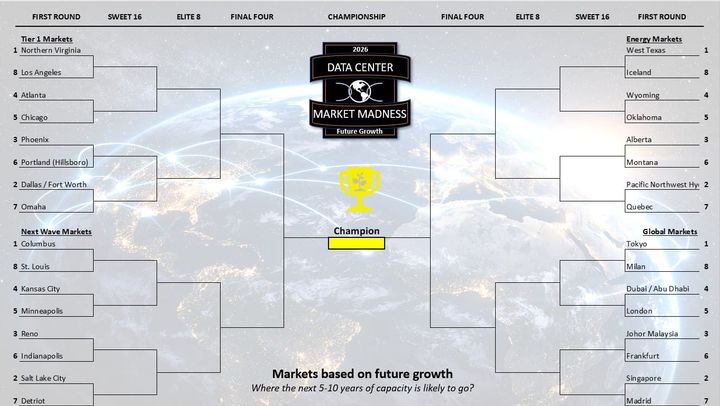
2) Secondary markets are seeing renewed interest
Developers are actively exploring Tier 2 markets where land, power access, and permitting timelines are more manageable than traditional Tier 1 hubs.
What this means:
The next wave of data center markets may look very different from the last one.
3) Developers are redesigning projects around higher power densities
Many planned builds are being redesigned to accommodate AI clusters that require far more power per rack than traditional enterprise workloads.
What this means:
Facilities designed five years ago may already be outdated.
4) Power availability continues to dictate site strategy
The biggest constraint in nearly every new project remains power delivery timelines. Developers are adjusting build strategies around utility interconnection schedules.
What this means:
Site selection is increasingly a grid planning exercise.
5) Repurposing industrial sites is accelerating
Former industrial land, manufacturing sites, and energy facilities are increasingly being repurposed as data center campuses.
What this means:
Infrastructure history is becoming infrastructure opportunity.
3. Green energy and environmental builds
1) Renewable energy procurement continues to scale
Technology companies continue signing long term power purchase agreements for solar and wind energy to support expanding data center portfolios.
What this means:
Renewable energy is now embedded in infrastructure strategy rather than treated as an add on.
2) Nuclear energy discussions are gaining momentum
Several technology companies are exploring nuclear energy partnerships to provide stable low carbon baseload power for large scale data centers.
What this means:
AI may be the catalyst that brings nuclear back into the energy conversation.
3) Water usage remains a growing community concern
Communities and regulators are increasingly focused on water consumption associated with cooling systems in large data center campuses.
What this means:
Cooling technology choices are becoming political decisions as much as engineering decisions.
4) Waste heat reuse projects are expanding in Europe
European operators continue experimenting with district heating systems that use excess data center heat to warm nearby buildings and communities.
What this means:
Energy efficiency is becoming part of the public narrative around infrastructure.
5) Cooling technology innovation continues accelerating
Liquid cooling adoption continues to grow as AI clusters push thermal limits beyond what traditional air cooling systems can support.
What this means:
Thermal engineering is becoming a core design discipline for future facilities.
4. Government policies that affect data centers
1) Power grid planning is becoming a policy priority
Regulators and grid operators are increasingly focused on how large data center loads impact long term grid planning.
What this means:
Energy policy and digital infrastructure policy are becoming the same conversation.
2) Tax incentives are facing greater scrutiny
Some states are reviewing or reconsidering tax incentives offered to data center developers as projects grow larger and public attention increases.
What this means:
The economic development narrative around data centers is evolving.
3) Zoning and permitting debates are intensifying
Local governments are facing increased pressure from both residents and developers when approving large data center campuses.
What this means:
Community engagement is becoming a strategic requirement, not a public relations exercise.
4) Governments are exploring digital infrastructure strategies
Some countries are beginning to treat data centers as strategic infrastructure similar to ports, railways, and energy facilities.
What this means:
Expect more national level policies shaping where compute infrastructure gets built.
5) Environmental reporting requirements are expanding
Regulators are requesting more transparency around energy usage, water consumption, and emissions associated with large data center projects.
What this means:
Operational transparency will increasingly be part of the license to operate.
Closing thought
The industry keeps talking about demand, but demand is no longer the interesting part of the story. The real story is coordination.
Power. Land. Capital. Cooling. Networks. Permits. People.
The future of data center development will not be determined by who has the best slide deck. It will be determined by who can align all of those pieces at the same time.
And that is much harder than announcing a gigawatt campus.
"The content is based on public information and personal analysis. This is not financial or investment advice."