The Silent Constraint in the AI Data Center Boom: People, Culture, and the Workforce We Are Not Talking About Enough

December 10, 2025
The data center industry is experiencing the most dramatic expansion cycle in its history. AI has accelerated demand in ways traditional forecasting models never imagined. Power availability now defines strategy more than land or capital. Operators with upgraded cooling, secured renewable PPAs, and constructive government relationships are separating from the pack. And for the first time, entirely new geographies are becoming real development frontiers.
But amid this surge, one strategic constraint continues to receive far less attention than it deserves: the workforce and the culture required to support it.
A Fast Growing Industry With an Immature Talent Base
Even with all the capital entering the sector, the data center world is still relatively young. Our workforce is not as deep or as evenly distributed as we often assume. When companies expand into secondary or emerging markets, they quickly discover that experienced technicians, operators, and engineers are not automatically available at scale.
The industry also suffers from a lack of standardization. Even among the top operators, there is no common language for key metrics. One of the clearest examples is churn. Churn at Digital Realty is defined differently than churn at Equinix. Expansion metrics, bookings, backlog, power definitions, utilization, and even basic reporting categories differ across the industry. When the fundamentals are not standardized, it becomes even harder to build consistent training, career paths, or operational expectations across regions.
This combination of rapid geographic expansion and non standard industry definitions creates the perfect storm. Workforces in new markets are expected to perform at the level of mature markets, even though the supporting systems, talent pipelines, and cultural norms are not the same.
Culture Is Not a Soft Topic. It Is an Infrastructure Layer
In my years leading global finance and operations teams, I have learned that culture is not a set of values posted on the wall. It is infrastructure. It determines how fast a company can scale and how well it can maintain quality during growth.
Data center operators frequently grow through acquisition. With each acquisition comes inherited processes, inherited labor, inherited systems, and an inherited culture. Too many executives assume they can simply graft a new identity over it. That never works.
A high performing culture is:
- Open and communicative
- Inclusive and diverse in thinking
- Built on psychological safety
- Transparent and mission driven
- Supportive of professional development
- Sustainable in work expectations
- Respectful of different regional norms
And this last point is where the industry is at real risk.
One Culture Cannot Simply Be Imposed Globally
Data center growth is accelerating the most in areas with very different cultural expectations about work life balance, holidays, social responsibilities, and time away from work.
In EMEA, for example, it is normal and expected that employees take extended PTO, observe regional holidays, disconnect after hours, and protect personal time. These norms are not signs of low productivity. They reflect deep cultural values that lead to long term employee loyalty and lower burnout.
In contrast, North American operators often run at a faster pace with longer hours, fewer holidays, and a more flexible boundary between work and personal time.
Both models can work.
Neither can simply be forced upon the other.
When a global company pushes a single pace, a single set of expectations, or a single approach to availability across all regions without understanding why those norms exist, it sets the stage for disengagement and turnover.
The Cost of Turnover Is More Than Money
Replacing a data center professional is not just a matter of salary and recruiting fees. The true cost is far deeper:
- Lost domain knowledge
- Lost customer context
- Lost relationships with vendors and contractors
- Lost operational history
- Months of ramp time
- Increased risk of errors during the transition
- Stress placed on the remaining team members
In high density AI environments, these costs multiply. It can take years to fully replace the depth of experience contained in a strong operator, technician, analyst, or engineer.
Turnover slows growth more than any capital constraint.
A talent gap will stop a project faster than a supply chain delay.
And no expansion plan can succeed if the people executing it do not feel supported, heard, or respected.
Building People Infrastructure With the Same Rigor as Physical Infrastructure
As an industry we know how to evaluate megawatts, cooling systems, and PPAs. But we need to start applying the same discipline to people infrastructure.
That means:
- Clear role definitions
- Consistent training paths that work in every region
- Reporting metrics that mean the same thing across all business units
- Cultural integration plans for acquisitions
- Leadership development programs that reflect local norms
- Respect for regional differences in holidays, PTO, and social expectations
- Open communication and psychological safety as non negotiable leadership competencies
AI will transform design, power planning, and capital allocation.
But it will also transform how teams work, what skills they need, and how we lead them.
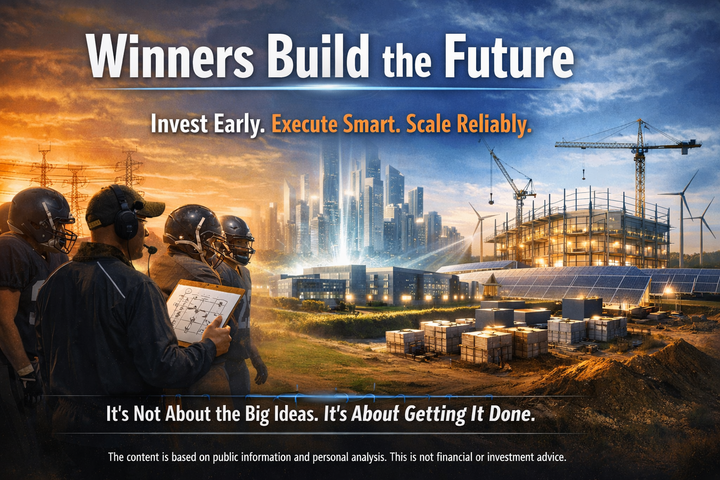
The Future Winners Will Be Those Who Invest in Culture and Workforce as Deliberately as They Invest in Megawatts
We cannot scale AI without skilled labor.
We cannot maintain quality without intentional culture.
We cannot reduce turnover without understanding global people norms.
And we cannot build a sustainable competitive advantage without investing as deeply in our teams as we do in our physical infrastructure.
The data center industry has never had more opportunity.
But the companies that succeed in the next decade will be the ones that understand growth is not only a matter of power, land, and capital.
Growth is a matter of people.
And people are the infrastructure that makes everything else possible.
“Content is based on public information and personal analysis. Not financial or investment advice.”