
Talent Was Never the Question
January 16, 2026
Fit Was
Over the years, I have watched organizations repeat the same mistake quietly and expensively.
They do not misunderstand talent.
They misunderstand what talent needs to succeed.
This becomes obvious when you look at professional sports.
When someone reaches the professional level, whether it is the NFL or the executive ranks of a company, the debate about whether they are talented is already settled.
You do not reach that level by accident.
You do not survive that level without exceptional ability.
Public perception often clouds this reality. Fans and headlines label players as busts or disappointments. But inside the league, everyone knows the truth. These athletes are gifted. They are among the best in the world at what they do.
The same is true in business. People hired into senior roles are not average. They are there because they have demonstrated judgment, capacity, and the ability to perform under pressure.
When results fall short, talent is rarely the root cause.
Two Quarterbacks. One Story.
Sam Darnold and Geno Smith were both drafted by the New York Jets with expectations that they would become franchise cornerstones.
Instead, they entered an organization still searching for its identity.
Coaches changed.
Offensive systems reset.
Leadership direction shifted.
Each season required relearning how to lead, how to execute, and how to win, often with limited protection and very little margin for error.
From the outside, it looked like failure.
From the inside, it looked like elite talent operating without a stable platform.
Later in their careers, something telling happened.
Geno Smith found success with the Seattle Seahawks. Sam Darnold began to re establish himself with the Minnesota Vikings.
What changed was not their ability.
What changed was the environment and the question their organizations finally answered.
What Changed Was Not the Player
It Was the Question the Organization Asked
From the outside, the narrative was simple.
They matured.
They figured it out.
They finally put it together.
That explanation is convenient. It is also incomplete.
Neither quarterback suddenly discovered arm strength, vision, or composure they did not already have. What changed was the system around them and the expectations placed on them.
Their new organizations asked a different question.
Not, Why is this player not delivering? But, What are we asking this player to overcome just to do their job?
In Seattle, Geno Smith was not asked to save a franchise. He was asked to operate within a clear system, supported by consistent leadership and defined roles. Friction dropped. Confidence followed.
In Minnesota, Sam Darnold entered an offense with structure, protection, and clarity. He did not need to be everything. He just needed to execute.
Talent does not thrive when pressure endlessly increases.
It thrives when unnecessary friction is removed.
The same dynamic plays out every day inside companies.
Systems Matter More Than We Admit
In business, we often assume high performers will adapt to anything.
That belief is comforting and wrong.
Talent cannot compensate forever for missing processes, unclear systems, or inconsistent leadership direction. At some point, friction overwhelms capability.
Organizations do not always fail because they hired the wrong people. They fail because they never built the operating structure those people needed.
- Clear decision rights
- Repeatable processes
- Aligned incentives
- Leadership that knows where the company is going
Without these, even exceptional people stall.
This reality becomes unavoidable during periods of growth.
Growth Breaks Old Models
As companies scale, the behaviors that once drove success often stop working.
Founder intuition gives way to complexity.
Informal communication no longer scales.
Legacy processes become bottlenecks instead of advantages.
Many organizations recognize this and make the right move. They hire experienced operators, builders, and transformation leaders who have seen the next stage before.
Then they make the harder mistake.
They ask those people to operate inside systems that were never designed for growth.
The hire was correct.
The environment was not ready.
When tension appears, the story often turns personal. The individual is labeled as too aggressive, not collaborative enough, or not the right fit.
But sometimes those employees were hired for a specific reason. To challenge old ways. To modernize systems. To prepare the organization for what comes next.
When leadership resists that change, friction is inevitable.
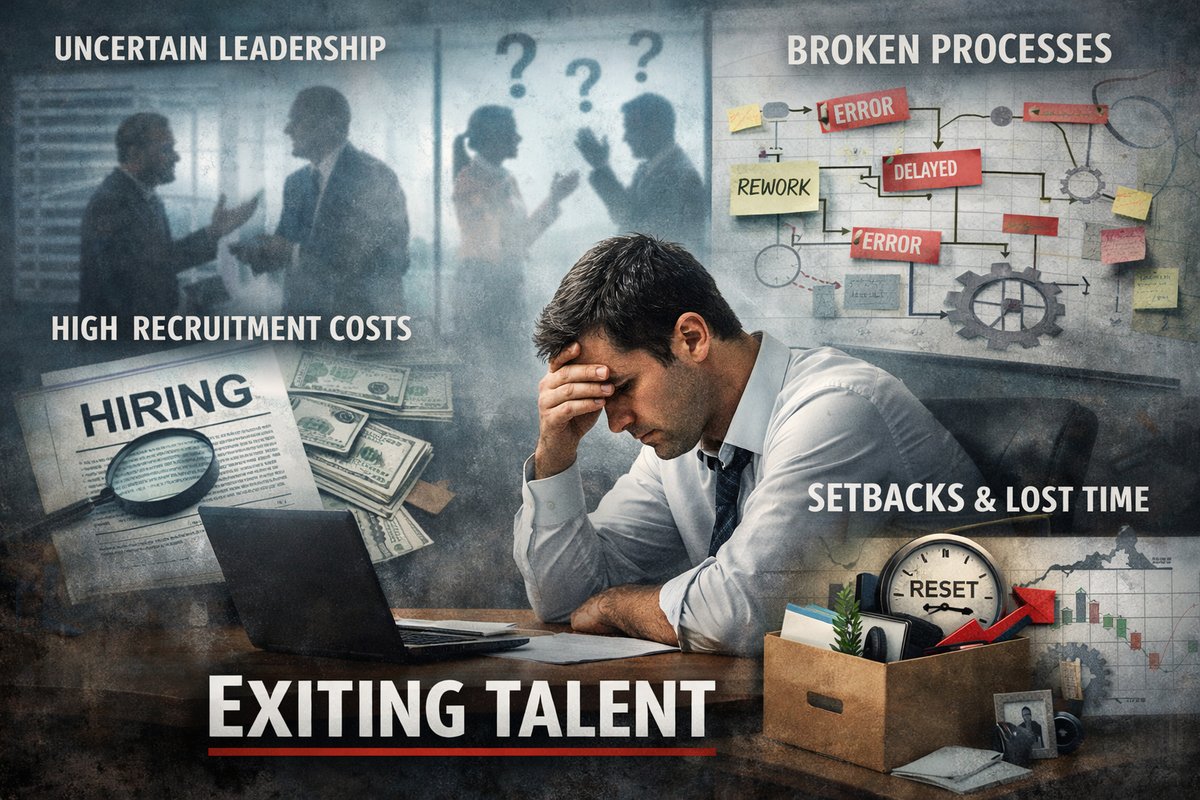
When Talent Leaves, the Clock Resets
When gifted people exit, the cost is not just turnover.
It is lost momentum.
Delayed transformation.
Years added back to strategic timelines.
In sports, losing a quarterback can set a franchise back multiple seasons.
In business, the damage is quieter but just as real. Strategies stall. Teams reset. Competitors move ahead.
The most painful moment is watching that same person succeed somewhere else.
Because then the question becomes unavoidable.
Was the problem really them? Or did we fail to evolve fast enough to support them?
Talent Thrives Where Alignment Exists
High performers do not need to be rescued.
They need clarity, structure, and leadership alignment.
They need organizations willing to evolve as they grow.
They need systems that match ambition.
When that alignment exists, performance looks effortless. When it does not, even the best struggle.
Because whether in sports or business, outcomes are rarely about raw talent.
They are about whether the organization was ready for it.
“The content is based on public information and personal analysis. This is not financial or investment advice.”