Data Center Intelligence - Weekly Roundup (Jan 5-11)
January 14, 2026
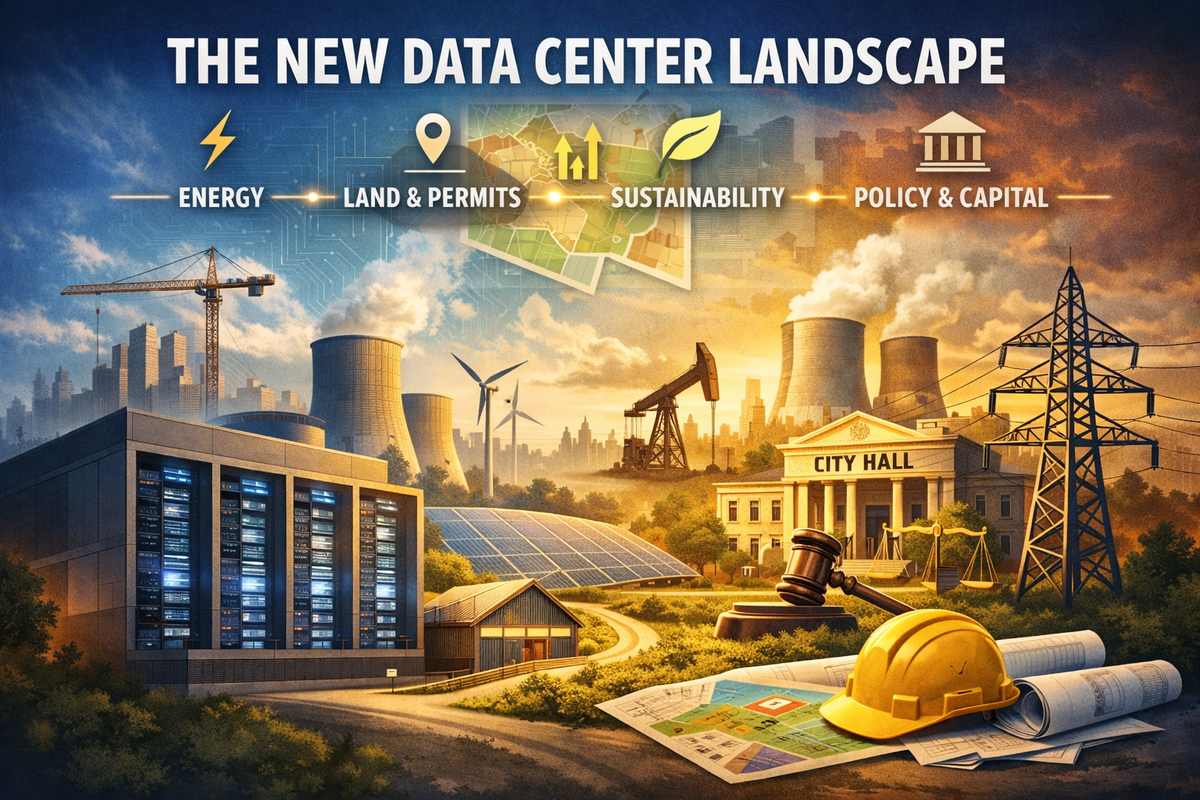
The data center world is changing fast these days. With demand skyrocketing for AI-ready infrastructure, there’s a ton of investment pouring in and companies are expanding across the globe. Tech giants and private equity groups are behind bigger and bigger facilities, but that’s bringing a whole new set of challenges. Finding enough land and reliable energy isn’t simple, and everyone’s trying to hit ambitious sustainability targets while keeping up with shifting government rules. Here’s a look at what’s shaping the industry right now, from record-breaking deals and aggressive growth plans to the shift toward green energy. More and more, data centers are under the microscope, but there’s no doubt they’ve become a core part of the digital economy.
1) Industry trends
Acquisitions, customer commitments, and big checks getting written
OpenAI and SoftBank put fresh money into SB Energy to fund a 1.2 gigawatt Texas build
Two of the loudest names in AI are investing directly into the infrastructure and energy side of the house, tied to the Stargate buildout.
What it means: This is like a restaurant chain buying the farm instead of just signing a contract for lettuce. When the core ingredient is scarce, you stop treating it like a vendor relationship and start treating it like a strategic asset. For FP&A teams, the model shifts from lease expense forecasting to multi year power and capex sequencing.
KKR plus Oak Hill commit about $2 billion to scale Global Technical Realty in Europe
Private capital is still leaning in hard, especially toward platforms that can move fast in constrained European markets.
What it means: Think of this like funding a homebuilder that already has the permits, the subcontractors, and the lots. The money is not the hard part anymore. Speed and certainty are.
DayOne raises more than $2 billion in Series C to accelerate global expansion
Another major funding round aimed at AI ready capacity across multiple regions.
What it means: The market is rewarding companies that can stack three things at once: land, power, and delivery execution. It is the difference between owning a blueprint and owning a factory line that can actually ship product.
xAI announces a more than $20 billion Mississippi data center investment with near term operations
Yet another AI player is placing an enormous bet on physical infrastructure, not just models.
What it means: This is the AI version of the oil rush. Everyone is racing to stake a claim on the resource that matters. In this case, the resource is not land. It is deliverable megawatts.
Marvell buys XConn to deepen AI data center connectivity silicon
Chip and networking suppliers are consolidating around the plumbing that makes large AI clusters work.
What it means: Imagine building a stadium. You can have the field and the seats, but if you cannot get people through the gates quickly, the whole thing fails. AI data centers are becoming limited by interconnect and data movement as much as compute.
2) Future expansion
Land, permits, and the physical chessboard
AWS gets permission for three new Dublin data centers, totaling 73 megawatts
Ireland continues to carefully add capacity, even with the well known grid and policy scrutiny there.
What it means: Dublin is like a popular downtown where everyone wants a new restaurant, but parking and power are limited. Any new approval signals political and infrastructure alignment, not just demand.
QTS wins approval in Northumberland for a large multi data hall project
The UK continues to push new large scale sites outside the traditional London gravity well.
What it means: This is the expansion of the digital highway system. When the main interchange is congested, growth moves to the next exits where land and power are more available.
A major rezoning moves forward for a 600 acre hyperscale project in Marana, Arizona
Local zoning decisions are becoming the new front line.
What it means: This is like approving a new airport runway. The technical build is hard, but the local permission is the real gate.
Bridge Data Centres maps expansion into Japan, Australia, and the Middle East
A platform backed by big capital is chasing new geographies where AI demand is rising and regional capacity is still catching up.
What it means: If Northern Virginia is Manhattan, these markets are the fast growing neighborhoods where developers go next because that is where the next decade of growth can actually be built.
Arkansas lands a proposed $6B data center deal near Little Rock
A new mega campus announcement built around land availability and power access.
What it means: The industry is spreading the way big box retail did years ago. Once the prime corners are taken, growth goes where highways, utilities, and permitting are friendlier even if it is not a classic tech hub.
3) Green energy and environmental builds
Power sourcing, water, and the new sustainability arms race
Meta signs long term nuclear agreements tied to AI growth, including deals with Vistra plus SMR developers
Meta is locking in massive clean baseload power and backing new nuclear pathways.
What it means: This is like reserving electricity the way airlines reserve jet fuel supply. When your business cannot run without it, you stop shopping spot prices and start securing long dated supply.
China pushes industrial parks toward on site green power and microgrids
A policy roadmap encourages high on site renewable usage, with storage and energy management baked in.
What it means: Picture a mall that installs its own power plant and battery so the neighborhood grid does not get overloaded. Data centers are increasingly being treated like “large loads” that should bring their own solutions.
A major data center project in Wyoming advances with a large portion powered by Bloom Energy fuel cells
Approval momentum and fuel cell power planning tied directly to data center demand.
What it means: This is the generator era coming back, just cleaner and more industrial. When grid timelines stretch, developers look for “power you can build” not just “power you can request.”
Ormat and Switch sign a long term geothermal PPA for Nevada data centers
Baseload renewable power, directly contracted, tied to data center growth.
What it means: Geothermal is like having a steady paycheck instead of gig work. Solar and wind are great, but always variable. AI workloads like steady.
Vertiv calls out liquid cooling and digital twins as near term design priorities
The supply chain around cooling is treating AI density as the new normal.
What it means: Old data centers were like office buildings with air conditioning. AI data centers are starting to look like industrial plants with process cooling. Different equipment, different economics, different risks.
4) Government policies that affect data centers
Incentives, moratoriums, and transparency rules
A proposed Madison, Wisconsin moratorium would pause new data center applications while zoning rules are updated
Local governments are hitting pause to write the rulebook before the next wave arrives.
What it means: This is the classic “we need traffic lights before we approve the stadium.” Expect more local pauses, buffers, and new requirements around setbacks, noise, substations, and decommissioning.
A US Senate bill proposal would exempt fully isolated large loads from certain federal oversight
Federal level interest is rising around off grid and self supplied power systems for large users like data centers.
What it means: The law is trying to catch up to a new reality: some projects want to behave like private industrial campuses with their own power, not like normal utility customers.
Arizona lawmakers weigh ending a major data center tax break
Incentives are no longer assumed. They are being audited publicly as communities ask what they get back.
What it means: The “welcome mat” is turning into a negotiation. Data centers are becoming visible infrastructure, and visible infrastructure always ends up in politics.
Utah considers requiring data centers to report water use publicly in aggregate
Water reporting and transparency is moving from rumor to policy in dry states.
What it means: This is like calorie labels on a menu. Once the numbers are public, the conversation changes and so do design choices.
Microsoft launches a US initiative to cover power costs and publish more water data by region
Microsoft is leaning into a “pay our way” posture on utilities and water replenishment, responding to backlash.
What it means: This is a playbook for how hyperscalers try to keep permits moving. When communities fear rising bills, the operator starts offering a clearer social contract.
The simple translation
Data centers used to be “big buildings with servers.” They are turning into “industrial scale power projects that happen to output computing.”
The internet is not floating in the cloud. It is moving into the same world as highways, power plants, and zoning boards.
All these shifts, industry trends, sustainable energy pushes, changing government policies, are really shaking up the data center world. It’s not just about finding steady energy supplies or keeping up with new rules anymore. The companies that stand out are the ones that can think a few steps ahead and move quickly when it comes to locking down key locations. Digital infrastructure is weaving deeper into pretty much every part of our economy and daily lives, so the organizations that combine smart investments with a real commitment to sustainability are in the best spot for growth. Things are only getting more complicated and interconnected, and it’s clear that a vision for both the present and future is what will set leaders apart.
“The content is based on public information and personal analysis. This is not financial or investment advice.”