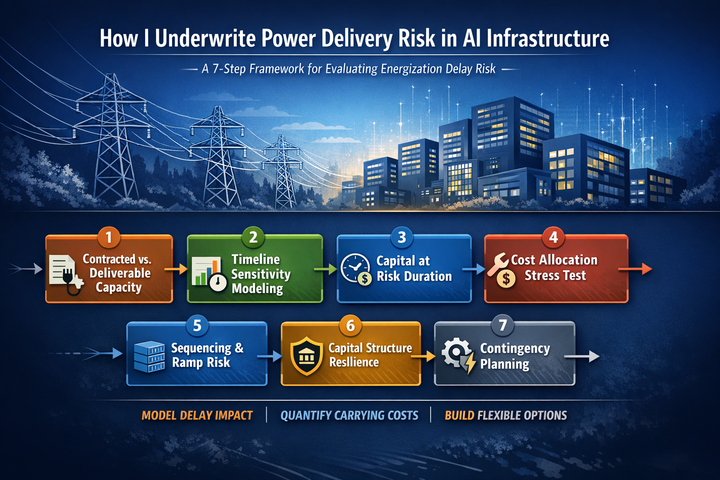
Data Center Intelligence - Weekly Roundup (Jan 12-18)
January 20, 2026
A plain English newsletter for people who do not live in server rooms
If you only remember one thing from last week, make it this
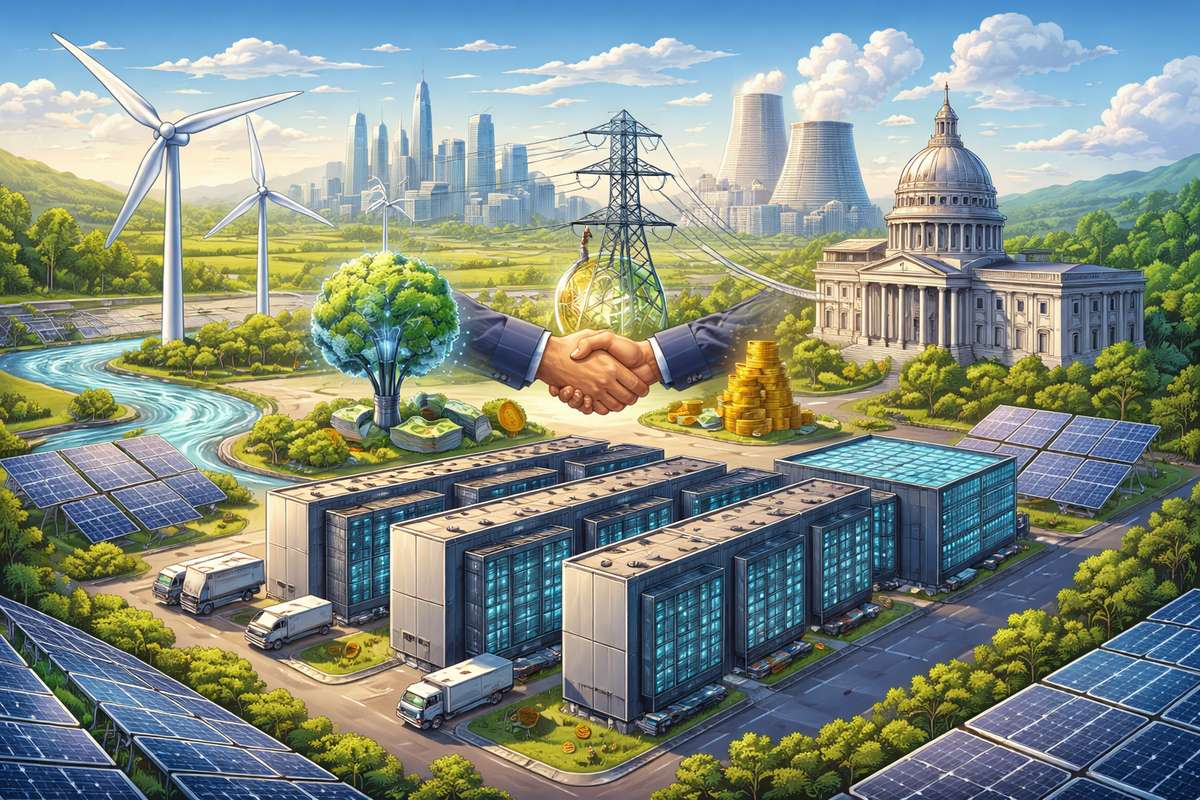
Data centers are not just buildings anymore. They are becoming power projects, real estate plays, and policy flashpoints all at once.
I write these through an FP&A lens, so I watch the same signals you would in any other capital intensive business.
Who is buying assets, who is signing long contracts, who is securing land, and which rules are about to change the math.
1) Industry trends
Acquisitions, customer commitments, and capital moves
1. Power companies are buying generation to “own the fuel pump”
Talen announced a roughly $3.5 billion deal to acquire 2.6 gigawatts of natural gas generation capacity. Translation: instead of just selling electricity into the market, they are buying the plants so they can offer a more packaged, dependable power story to data center customers.
What it means: Think of a busy restaurant buying the farm. It is not about hobbies. It is about controlling supply and cost when demand spikes.
2. Hyperscaler leasing is still alive and well
NTT Global Data Centers announced agreements with hyperscale cloud providers totaling more than 130 megawatts across multiple US campuses.
What it means: Not every big tech player wants to build everything themselves. Leasing is like renting warehouse space during a sales surge. Faster, less risk, and you can scale in chunks.
3. Financing creativity is expanding beyond traditional real estate debt
Patmos Hosting secured a $100 million CPACE loan tied to redeveloping the former Kansas City Star building into a multi use AI campus.
What it means: CPACE is basically “pay it back over time through a property assessment.” For data centers, it is another tool to stack capital without waiting on perfect conditions.
4. Fiber is getting treated like a strategic moat again
Verizon secured approvals to close its $20 billion Frontier acquisition. More fiber means more on ramps to cloud regions and data center campuses.
What it means: If data centers are airports, fiber is the highway system feeding them. The best airport in the world is useless if nobody can reach it.
5. Big tech is trying to reset the community narrative
Microsoft rolled out a “Community First AI Infrastructure” approach, framing commitments around paying its way on energy, water, and local infrastructure as it continues building.
What it means: This is PR, but it is also risk management. Permitting friction is becoming a real schedule killer, and schedule is money in FP&A.
2) Future expansion
Land, build adjustments, and where the next capacity shows up
1. Wisconsin just got a very large “statement build”
Vantage broke ground on a four building campus in Port Washington called Lighthouse, targeting 902 megawatts of IT capacity and linked to a reported $15 billion investment.
What it means: 902 megawatts is not a normal real estate project. It is closer to building a new industrial city. The headline is not the building. It is whether power and transmission show up on time.
2. Arkansas landed a multibillion dollar campus pitch
Avaio Digital Partners announced a $6 billion plan near Little Rock, with the broader site envisioned to scale much larger over time.
What it means: Emerging markets are getting real looks when they can offer three things: land, power, and political support. It is like a retailer choosing a distribution hub. The cheapest land is irrelevant if trucks cannot get in and out.
3. Meta’s ecosystem is still quietly assembling land
A Meta infrastructure partner bought a roughly $42 million land parcel in New Albany, Ohio.
What it means: Often the first public signal is not “Meta bought land.” It is vendors and special purpose entities building the chessboard around future builds.
4. Existing industrial sites are being repurposed into long term compute real estate
Riot acquired 200 acres at its Rockdale site for $96 million and also announced a first data center lease with AMD at that location.
What it means: This is the “buy the mall, then sublease to anchor tenants” play. Owning the dirt and infrastructure gives flexibility as compute customers change.
5. The industry is trying to build at a speed the supply chain was not designed for
A Data Center Dynamics analysis noted the push to deliver data centers in roughly 12 to 14 months, which is materially faster than traditional timelines.
What it means: Imagine asking a custom home builder to deliver a neighborhood every quarter. You can do it, but only if design, procurement, and power interconnect are standardized.
3) Green energy and environmental builds
How the industry is trying to keep up with power and water constraints
1. Geothermal is officially in the data center conversation
Ormat signed a 20 year agreement with Switch for about 13 megawatts from a Nevada geothermal plant, with potential add ons. Delivery is expected around 2030.
What it means: Geothermal is like baseload renewable. It runs more consistently than wind and solar. The tradeoff is it is location dependent, and timelines are long.
2. Microsoft is deploying “zero water” cooling in Iowa
Microsoft is using a zero water cooling approach for new buildings in West Des Moines, responding to local water concerns.
What it means: Cooling is the hidden operating cost driver. This is like switching a factory from water intensive processes to closed loop systems so the town does not have to expand its water plant for you.
3. Nuclear power is moving from “maybe someday” to “signed deals”
Meta reached an agreement to buy electricity from the Beaver Valley nuclear plant in Pennsylvania, as part of its broader approach to powering AI growth.
What it means: Nuclear is the closest thing to always on carbon free electricity at scale. The analogy is buying a long term reservation at a power station, not shopping for power hour by hour.
4. Sustainability is getting measured across the full lifecycle, not just operations
A new lifecycle focused study discussed how data center environmental impact can shift depending on cooling design and the kind of servers inside, especially with AI hardware.
What it means: It is like judging a car not only by miles per gallon, but by the emissions from building the car and making the fuel.
5. “Community first” is also an environmental strategy, not just messaging
Microsoft’s community commitments explicitly talk about water replenishment, recycled water, and funding infrastructure upgrades when needed.
What it means: In the real world, environmental constraints show up as schedule risk. If you cannot get a water plan approved, you cannot turn on the building.
4) Government policies that affect data centers
Rules that change who pays, and who gets priority
1. The chip policy shift is now a data center cost story
Reuters reported a new 25 percent tariff on select advanced AI chips, with carve outs described for chips used in US based data centers and other domestic uses.
What it means: Chips are the “engines” inside the data center. A tariff is like adding a toll to every engine shipped, which can push up project costs outside the US and reshape where capacity gets built.
2. The White House and governors are pressuring PJM on who funds new power plants
A plan discussed last week would push large new loads like data centers to fund dedicated generation or accept interruptible service during peaks.
What it means: This is the policy version of “if you bring 100 new customers to a small restaurant, you pay for the kitchen expansion, not the regular diners.”
3. A Senate proposal aims to make off grid power easier for large loads
Utility Dive reported on the DATA Act of 2026, which would exempt fully isolated large loads from certain federal regulation.
What it means: This could accelerate the “bring your own power” model. It is like letting a big factory build its own private road instead of lobbying for the state to widen highways.
4. State level regulation is accelerating, especially around water
Wisconsin lawmakers discussed a bill that would require water recycling approaches and annual reporting for data centers.
What it means: Water is becoming a permitting gate the same way emissions became a permitting gate for heavy industry.
5. Virginia is debating a batch of reforms tied to siting and oversight
Virginia lawmakers proposed multiple data center reform bills, reflecting how quickly policy is catching up in the largest US data center market.
What it means: When the biggest market starts rewriting rules, everyone else watches. It is similar to how building codes in major cities often become the template for other regions.
Closing thought
Last week looked like four separate conversations: deals, land, green energy, and policy.
It is actually one conversation
Power is the new currency of growth, and the public is now negotiating the terms.
If you are a non industry reader, here is the simplest mental model
A data center is a factory that sells computation instead of products. It needs land, power, cooling, connectivity, and permission. The companies that can secure all five, fastest, will win this cycle.
"The content is based on public information and personal analysis. This is not financial or investment advice."